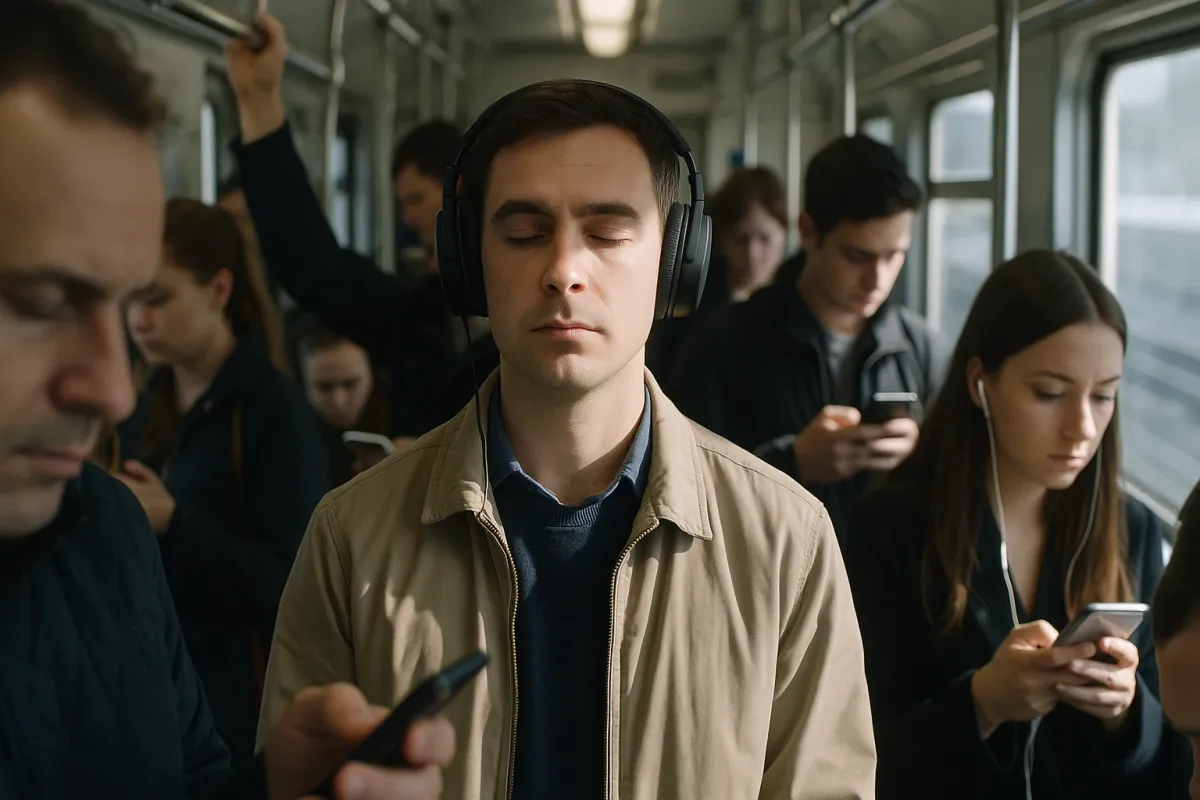
Every day, our feeds fill with other people’s lives: family dramas, viral rants, parenting debates, and quick-fire judgments from strangers we’ll never meet. This week, one of those moments came in the form of a “viral homeschool clip” that drew intense criticism online—what a mother saw as a cozy learning space for her child quickly became a battlefield of opinions and outrage. In a matter of hours, a simple video turned into a referendum on parenting, education, and how “good” parents should behave.
Whether or not we homeschool, scroll X, post on Instagram, or read every Reddit thread, we’re all living in this same atmosphere: one where everyone is watching, reacting, and often, overreacting. It’s no wonder our minds can feel crowded, foggy, or strangely noisy, even when we’re sitting alone at home.
Mindfulness won’t change the speed of the internet—or stop the next viral argument—but it can gently change how we meet it. It can give us a way to stay present, grounded, and clear, even as opinions swirl around us.
Below are five quiet, practical mindfulness practices for days when the internet feels like a storm and your head feels like the comment section. Each one is meant to be simple, realistic, and doable in the middle of regular life.
1. The Pause Before You Post
When someone else’s choices go viral—like the homeschool setup that sparked a wave of criticism—it’s easy to get swept into reacting: typing, sharing, judging, defending. The problem isn’t that we have opinions. It’s that constant, rapid reaction slowly trains the mind to be always “on,” never still, and rarely reflective.
The practice here is small: insert a conscious pause between your feeling and your response. The next time you’re about to comment on a viral clip, or even reply to a message that stirs you, try this sequence:
- Notice the feeling in your body (tight chest, quick breath, heat in the face).
- Take three slow breaths, in through the nose, out through the mouth.
- Ask a gentle question: “What am I really feeling right now?” (hurt, fear, envy, frustration, loneliness).
- Decide from that calmer place whether you still want to respond—and how.
You might still choose to comment, or share, or speak up. But the act of pausing shifts you from being pulled by the emotional current to standing on the shore, watching it more clearly. Over time, this small pause makes your inner world feel less like a viral thread and more like a space you can inhabit with intention.
2. Tending Your Inner Classroom
The homeschool clip that went viral showed one person’s idea of a “perfect” learning space. The internet then did what it does best: picking it apart, praising it, mocking it, and measuring it against thousands of other unseen standards. Yet the most important learning space you’ll ever have isn’t on camera. It’s the one inside your own mind.
Mindfulness invites you to treat your attention like a child you’re caring for: curious, distractible, sometimes overwhelmed, but always worthy of patience. Instead of criticizing yourself for not being “focused enough” or “calm enough,” experiment with a quieter stance: “In this moment, my mind is learning how to be here.”
Choose one simple activity today—washing dishes, tying your shoes, making tea—and turn it into a brief, gentle lesson in presence. As you do the task:
- Notice the movements of your body.
- Feel the texture (water, fabric, ceramic, warmth).
- Observe when your thoughts wander, kindly, as if watching a child look out the window.
- Gently bring your attention back, without scolding.
You’re not forcing focus; you’re training it, slowly, like guiding a student toward curiosity. In a world comparing classrooms, parenting choices, and lifestyles, this quiet commitment to your inner classroom is a radical, soft kind of clarity.
3. Choosing What Deserves Your Attention (And What Doesn’t)
The viral homeschool debate tapped into something bigger: who gets to decide what’s “right”? Parenting, work, relationships—everyone has an opinion, and in the age of social media, those opinions arrive as notifications. Our attention gets scattered across countless judgments, leaving very little left for what truly matters to us.
Mindfulness can be a gentle filter. Begin with this question: “What actually nourishes me?” Not what impresses others, not what you think you should care about—but what leaves you feeling a little more grounded, not more agitated.
For one day, observe your media intake like a curious scientist:
- How do you feel after 10 minutes of scrolling viral threads?
- How do you feel after reading something thoughtful, or stepping outside, or sitting in silence for a moment?
- Which activities clear your mind, and which clutter it?
Then, make one small adjustment. You might mute a few keywords, unfollow a consistently stressful account, or decide not to read comment sections on certain topics. This isn’t avoidance; it’s discernment. By consciously choosing what you let into your mental space, you create an environment in which clarity can grow, instead of constantly putting out emotional fires lit by strangers.
4. Grounding in the Body When the Mind Is Online
One challenge of modern life is that so much of our experience is disembodied: eyes on screens, thoughts in reactions, emotions triggered by distant events. Watching public arguments over someone’s homeschool room or family conflict, we can feel real anxiety over things happening thousands of miles away. Our bodies, though, remain exactly where they are.
Grounding practices reunite the two: the online mind and the offline body. Think of it as gently reminding yourself, “I am here, not inside that video, not inside that argument.”
Try a one-minute body grounding practice the next time you feel stirred up by something online:
- Put the device down or at least rest it on a surface.
- Feel your feet on the floor. Notice the points of contact: toes, heels, arches.
- Notice where your body is supported (chair, bed, couch).
- Take one slow breath and silently say to yourself on the exhale: “Here.”
- Scan your body for any tight or tense area, and soften it by 5%, not all the way—just a small release.
This small, physical anchoring helps your mind realize it doesn’t have to live inside every story it encounters. Over time, your nervous system learns: news can be intense, people can disagree sharply, and yet there is still a solid, quiet place in you that remains untouched.
5. Practicing Quiet Compassion in a Loud Comment World
The viral homeschool clip became more than a video; it became a target—of criticism, concern, mockery, and defense. There’s a familiar pattern: something personal gets shared, the crowd gathers, and compassion often gets lost beneath clever takes and harsh judgments.
Mindfulness offers an alternative: silent, steady compassion, even for people you will never meet. It doesn’t mean you approve of everything you see; it means you recognize shared humanity underneath it all.
The next time you watch a clip that triggers strong opinions—about parenting, politics, identity, or anything else—experiment with this practice before you scroll away:
- Bring to mind the person in the clip.
- Breathe in, and silently say: “Just like me, this person wants to be safe.”
- Breathe out: “May they find what they truly need.”
- Repeat once for yourself: “Just like them, I want to be safe. May I find what I truly need.”
This may feel small, or even invisible, compared with the torrent of public comments. But it changes you. It softens the inner critic, eases mental rigidity, and clears space where understanding can replace instant judgment. That inward spaciousness is a form of mental clarity you can carry into every corner of your life—family, work, and your own private thoughts.
Conclusion
We can’t slow the internet down. Today it’s a homeschool video going viral; tomorrow it might be a family conflict, a celebrity mishap, or a political moment that splits the feed in two. The wave will keep coming.
What we can do is change how we meet that wave.
By pausing before we react, tending the quiet classroom of our own mind, choosing what we let in, grounding in the body, and practicing quiet compassion, we gradually create a different kind of space within ourselves—a space that isn’t constantly at the mercy of the next headline or hot take.
In that space, clarity has room to appear. Not as a loud certainty, but as a calm, steady knowing: I can stay present. I can think clearly. I can respond, or choose not to, from a place that feels true.
The world will go on being loud. You are allowed to be quietly awake inside it.
Key Takeaway
The most important thing to remember from this article is that this information can change how you think about Mindfulness.