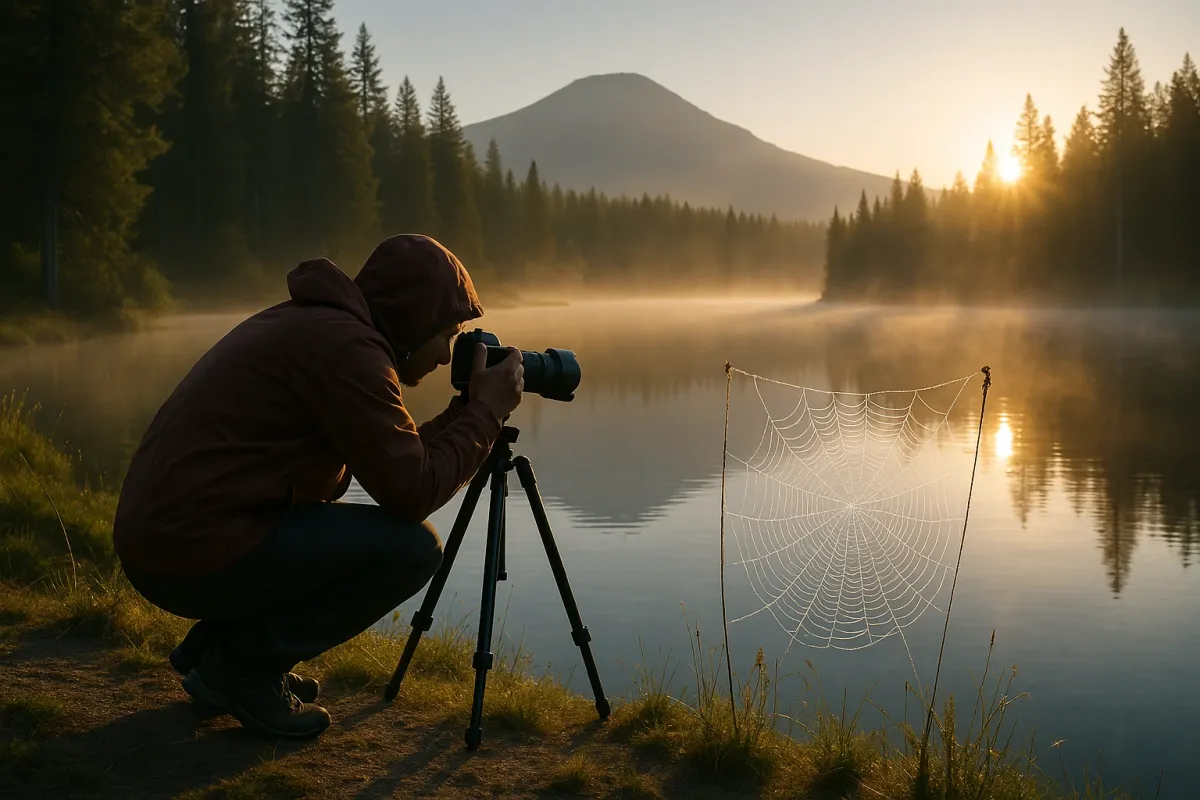
When the winners of the Nature Photographer of the Year awards are announced, most people see breathtaking images: a bird suspended mid-flight, mist curled over a forest, light threading through ice. But behind every single frame is something else—hours of stillness, deliberate attention, and a kind of quiet focus that most of us rarely touch in daily life.
Those photographers aren’t just lucky; they’re practicing a form of mindfulness in the wild. Waiting motionless in the cold for a fox to appear. Adjusting to changing light instead of fighting it. Noticing tiny shifts in wind, cloud, and shadow. As their photos go viral across social media again this year, there’s something powerful we can borrow from their process: the ability to hold our minds steady, even while the world keeps moving.
You don’t need a camera, a mountain, or a passport to cultivate that same kind of presence. You just need a willingness to pause and look more closely at the life already around you.
Below are five gentle, nature-inspired mindfulness practices to help you reclaim mental clarity, wherever you are.
Seeing Like a Photographer: One Square Meter of Attention
Nature photographers often start by choosing a single, limited frame. Instead of trying to capture everything, they commit to a small window and explore its depth.
You can do the same with your focus. Choose one small “square meter” of your environment—a patch of desk, a corner of your room, a stretch of sidewalk, or even a section of your screen. For three to five minutes, let your attention rest there and nowhere else. Notice color, texture, light, shadow, shapes, and movement. If you’re at your computer, observe the tiny details you usually ignore: the cursor blinking, the grain of the laptop casing, how letters appear as you type. When your mind wanders (as it will), gently guide it back into that small frame, as a photographer would re-center their lens. This simple constraint calms the nervous system because it removes the pressure to take in everything at once. Over time, it also trains your brain to go “narrow and deep” on tasks, instead of living in a constant state of wide, shallow distraction.
Waiting for the Bird: Practicing Patient Stillness
Many award-winning wildlife photos exist only because the photographer waited—sometimes for hours, in uncomfortable conditions, with no guarantee of success. They don’t force the moment; they create the conditions and let nature arrive when it’s ready.
You can practice this kind of stillness in much smaller, more practical ways. Choose one point in your day—before a meeting, in a queue, while your coffee brews—and turn it into a stillness pause. For two minutes, do nothing but sit or stand quietly. Feel the contact of your body with the chair or the ground. Sense the temperature of the air on your skin. Notice sounds near and far without labeling them as good or bad. Your mind will want to grab your phone or plan the rest of the day. Instead of indulging that impulse, see if you can wait with yourself the way a photographer waits with the landscape—curious, open, not demanding anything special to happen. This gentle discipline strengthens your ability to stay with a task or conversation without constantly seeking the next stimulus.
Following the Light: Breath as a Moving Landscape
In nature photography, light is everything. The same mountain looks completely different at dawn, noon, and dusk. Photographers track these shifts closely because they know their job isn’t to control the light, but to work with it.
Your breath is a kind of inner light—constantly changing, always available to be noticed. To use it as a focus anchor, set a timer for three to five minutes. Sit comfortably and bring your attention to one specific aspect of your breathing: the coolness of air at the nostrils, the rise and fall of your chest, or the subtle expansion of your lower ribs. Rather than forcing deep breaths, simply follow what is already happening, like watching the sky gradually change color. When thoughts appear (“I’m doing this wrong,” “I don’t have time”), acknowledge them and gently return to the breath’s movement, the way a photographer would wait for the light to shift back into place. Practiced regularly—once in the morning, once in the afternoon—this simple exercise clears mental fog, lowers stress, and gives you a reliable way to steady yourself before focused work.
Composing the Shot: Single-Task Rituals
If you watch behind-the-scenes footage of contest-winning photographers, you’ll see how deliberate their movements are. They check their settings, frame the shot, adjust their footing, pause, and then press the shutter. There’s a ritual to it.
You can bring that same ritual to a single task you do every day, turning it into a focus practice. Choose one activity—writing an email, making tea, cleaning a small space, or reviewing a document. Before you begin, clear your workspace just enough that you see only what relates to that task. Then:
- State your intention in one sentence: “For the next ten minutes, I’m just going to draft this email.”
- Silence or set aside other devices and browser tabs.
- Take three slow breaths, sensing your body relaxing with each exhale.
- Engage fully with the task, noticing the small steps: your hands on the keyboard, the warmth of the mug, the click of each item you put away.
- When you’re done, pause again for one breath before moving on.
This simple “compose the shot” ritual shifts your brain out of multitasking mode. It signals: this is what matters right now. Over time, your capacity to enter that steady, undistracted state grows stronger and becomes easier to access when you need it most.
Letting the Background Blur: Gentle Boundaries for a Noisy World
In award-winning images, not everything is in focus. Photographers deliberately blur the background so the main subject stands out. Online, we often forget this: every notification sounds urgent, every storyline competes for our full attention.
You can reclaim clarity by consciously deciding what will remain “sharp” and what will become “soft background” for a while. Begin by choosing a single priority focus for the next hour—perhaps a project, a conversation, or even rest. Then, create a small boundary around it:
- Put your phone in another room or on “Do Not Disturb” for a set block of time.
- Close all browser tabs except the ones directly related to your focus.
- If possible, let someone know you’ll be unavailable for the next 30–60 minutes.
When other thoughts and impulses arise (“I should check the news,” “What about that message?”), imagine them as parts of the landscape outside the frame—real, but not your subject right now. You’re not denying reality; you’re choosing what to bring into focus in this moment. This practice is especially grounding when the news cycle feels overwhelming or social feeds are crowded with intense stories. It allows you to stay informed on your own terms, without sacrificing your mental clarity to the constant pull of everything at once.
Conclusion
The photographers whose work is being celebrated this year don’t find focus by accident. They cultivate it in the rain, in the dark, in the long, uneventful stretches where nothing much seems to be happening—until suddenly, something breathtaking does.
You can do the same in your own, quieter way. By narrowing your field of attention, practicing patient stillness, following the movement of your breath, creating simple single-task rituals, and gently blurring the background noise, you’re training your mind to see more clearly.
You may never stand on a glacier at sunrise waiting for the perfect shot. But in the small, ordinary frames of your day, you can still choose to look closely—and in that focused looking, discover a calmer, clearer way of being here, right now.
Key Takeaway
The most important thing to remember from this article is that this information can change how you think about Focus Techniques.