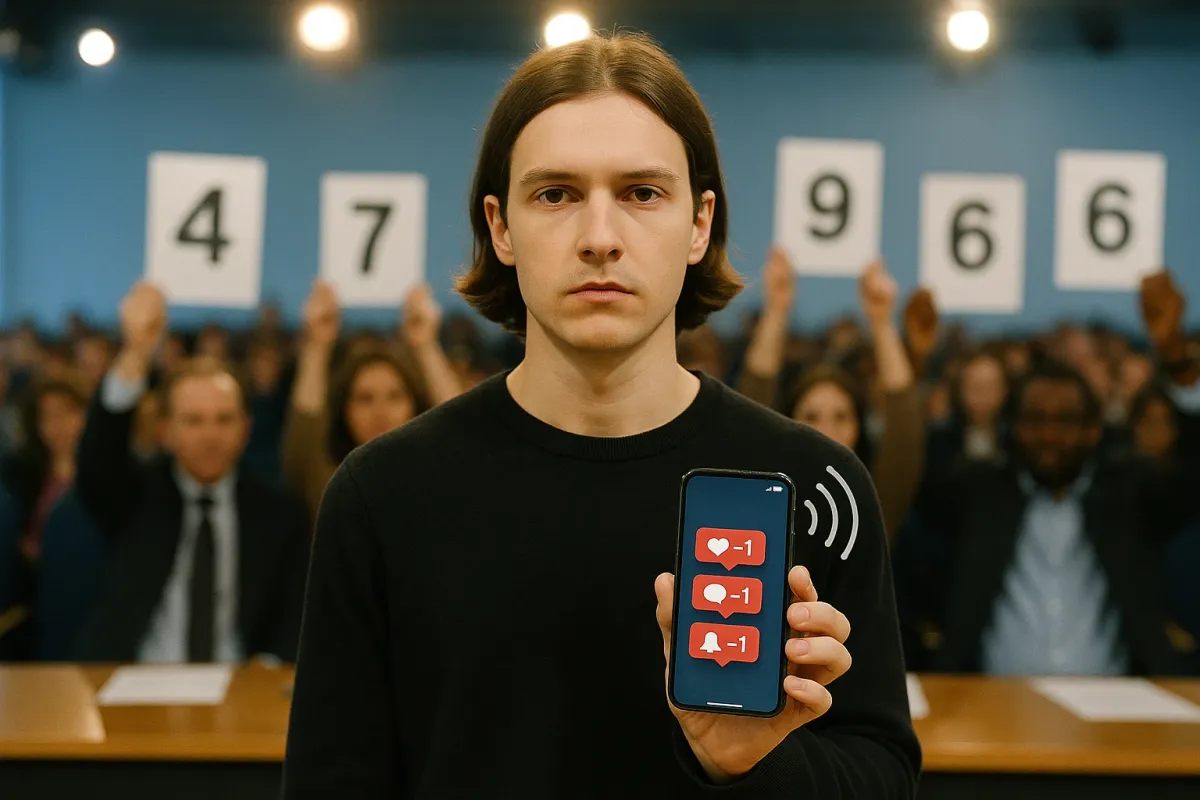
Online this week, Bored Panda’s viral piece “Would You Stay Calm Or Lose It? Vote On 26 Scenarios And See Where You Stand” turned everyday stress into a kind of spectator sport. Thousands of people are clicking, judging, and comparing how they’d react to traffic jams, rude texts, or someone cutting in line. It’s entertaining—and oddly revealing. We’re fascinated not just by what happens to us, but by how we show up when it does.
Beneath the humor and the polls is a quiet truth: a lot of us aren’t sure what our “calm” actually looks like anymore. We measure ourselves against other people’s reactions, against comments and percentages, instead of checking in with our own nervous system. When “Would you lose it?” becomes a daily question—online, at work, in relationships—it can be hard to feel grounded inside your own life.
Meditation and mindfulness won’t remove the stressors, or the messy situations that make good headlines. But they can change the space between stimulus and response—the few seconds where your choice lives. The practices below are simple, time-flexible, and designed to help you meet those “Would you stay calm or lose it?” moments with a clearer, steadier mind.
1. The One-Breath Reset: A Micro-Pause for Heated Moments
Think of the last time you felt on the verge of “losing it”—maybe in a group chat, stuck in a line, or reading something infuriating online. Our instinct is to react immediately, often faster than we can fully feel what’s happening inside us. The one-breath reset is a way to reclaim just a few seconds of awareness before you move.
Wherever you are, gently inhale through your nose for a slow count of four. Feel the air move in. Pause for a beat at the top—not as a rigid hold, but as if you’re pausing a sentence. Then exhale through the mouth or nose for a slow count of six. Let your shoulders soften as you breathe out. You don’t have to look peaceful or “zen”; you’re simply giving your nervous system a tiny downshift. That single consciously felt breath often creates just enough space to choose a calmer reply, to close the app instead of firing back, or to step away from the situation entirely. You can repeat this as many times as you like, but even one intentional breath is a complete practice on its own.
2. Body Scanning Instead of Doom-Scrolling
That Bored Panda poll asked readers to vote on how they’d react in hypothetical scenarios. Your body, meanwhile, is quietly taking its own poll all day long: heart rate, muscle tension, breath, gut feelings. When we’re constantly scrolling, comparing reactions, or replaying conversations, we tend to live in our heads and ignore these signals—until they shout.
A body scan is a gentle way to bring attention back from the swirl of thoughts into the concrete reality of your physical self. Sit or lie down comfortably. Close your eyes if that feels safe, or lower your gaze. Start at the top of your head and slowly move your awareness down: forehead, eyes, jaw, neck, shoulders, arms, chest, back, abdomen, hips, legs, feet. You’re not trying to relax anything on purpose. You’re simply noticing: warmth or coolness, tightness, tingling, heaviness, or even numbness. If your mind wanders to your to-do list or a comment you read, that’s normal. Gently guide your attention back to the next area of the body, like returning to a page in a book. In five to ten minutes, you’ll often discover that your thoughts are quieter, not because you forced them, but because you gave your body permission to be felt.
3. The “Single-Task Bubble” in a Multitasking World
The scenarios in “Would You Stay Calm Or Lose It?” highlight how quickly we’re thrown off when too much hits at once: noise, demands, messages, expectations. Our culture still praises multitasking, but our minds are generally calmer and clearer when they do one thing at a time. Single-tasking is less about productivity and more about nervous system hygiene.
Choose one everyday activity—making tea, washing dishes, brushing your teeth, or even walking from one room to another. For the next few minutes, let it live inside a “single-task bubble.” As you do the activity, keep your attention gently anchored to your senses: the sound of water, the warmth of the mug, the feel of your feet on the floor, the taste of toothpaste. When your mind darts to a headline, an argument, or a poll result, simply notice that it has wandered and bring it back to what your hands are literally doing. There’s no need to scold yourself; the returning is the practice. Over time, this trains your brain to recognize that it’s possible, even in a noisy world, to be fully with one thing. From that state, decisions tend to feel clearer and reactions less impulsive.
4. Name What You Feel, Not Just What Happened
The online poll asks, “Would you stay calm or lose it?” but real life is rarely so binary. What we call “losing it” is often a stack of unspoken feelings—hurt, fear, embarrassment, fatigue—that never had a chance to be noticed before they spilled out. Naming emotions as they arise is a surprisingly powerful form of mindfulness.
The next time something triggers you—a curt message, a canceled plan, a critical comment—pause and internally complete the sentence: “Right now, I notice I feel…” Then try to name at least two things: “Right now, I notice I feel disappointed and tense.” If that’s hard, you can start even more simply with: “This is frustration,” or “This is anxiety.” You’re not judging the feeling or explaining it away; you’re just turning towards it. Neuroscience research has shown that putting words to feelings can actually reduce their intensity in the brain. With practice, this habit turns reactivity into information. Instead of “I exploded for no reason,” it becomes “I was already exhausted and felt dismissed; no wonder that stung.” Awareness doesn’t erase discomfort, but it makes it much easier to respond with clarity rather than regret.
5. Evening Reflection: Your Own Quiet “Poll” of the Day
The appeal of interactive pieces like “Vote On 26 Scenarios And See Where You Stand” is that they give us a structured way to check ourselves—how we compare, where we fit. You can borrow that structure and bring it inward at the end of your day, without needing anyone else’s percentages.
Set aside a few minutes in the evening, away from your phone if possible. Sit comfortably, take two or three slow breaths, and then gently review your day. Instead of replaying everything, focus on just three questions:
When did I feel most grounded or calm today?
When did I feel most triggered or scattered?
What helped, even a little, in each of those moments?
You can jot down a few words in a notebook or simply reflect silently. The goal is not to rate yourself as “good” or “bad” but to notice patterns. Maybe you’re calmer after a short walk, or more reactive when you skip lunch. Over time, these quiet check-ins act like a personal map of your nervous system. You start to see where your edges are and what brings you back, so those “Would you lose it?” moments become less mysterious and more workable.
Conclusion
The internet will keep asking us to vote—on other people’s choices, on how we’d behave in imaginary scenarios, on whether we’d stay calm or fall apart. That can be lighthearted and even helpful, but it can also pull our attention outward so relentlessly that we forget the simplest question: how am I, right now?
Mindfulness doesn’t demand that you never “lose it,” or that you become endlessly patient and unbothered. It invites you instead to gently widen the space between what happens and how you respond. A single conscious breath, a brief body scan, a few minutes of single-tasking, a quietly named feeling, or a short evening reflection—these are small practices, but they add up. They help you recognize your own patterns not as verdicts, but as information.
In a world that loves to measure and compare reactions, you’re allowed to step back from the polls and return to the quieter data of your own experience. Calm isn’t a performance; it’s a relationship you keep tending, one mindful moment at a time.
Key Takeaway
The most important thing to remember from this article is that this information can change how you think about Meditation.