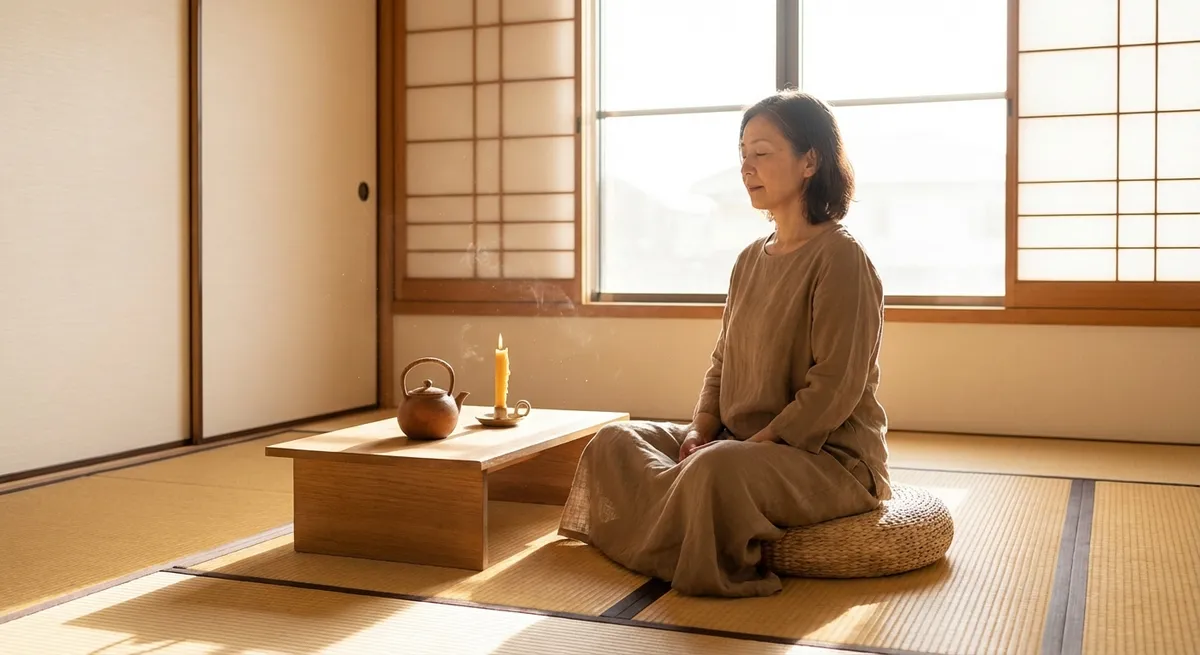
When life feels crowded and the mind feels foggy, it can be tempting to push harder, think more, and do more. Often, what we truly need is the opposite: a soft place to rest our attention and let the mind naturally settle. Meditation is not about forcing silence or chasing perfect focus. It is more like sitting by a quiet lake and watching the ripples gradually fade on their own.
This article offers calm, gentle guidance into five mindfulness practices that invite more space, lightness, and clarity into your day. Each practice is simple, adaptable, and can be woven into ordinary moments without pressure or perfection.
Meeting Your Mind With Kind Attention
Before exploring specific practices, it helps to understand the spirit behind them: kind attention. Many people approach meditation like a self-improvement project—another thing to fix or optimize. This mindset can unintentionally create more tension.
Kind attention is different. It is:
- Curious instead of critical
- Soft instead of forceful
- Accepting instead of controlling
When you sit quietly, thoughts will appear. Some may be mundane, some may be intense, and some may feel repetitive. Rather than trying to push them away, you simply notice: “Thinking is happening.” This quiet acknowledgment is already a form of clarity. You are no longer lost inside every thought; you are gently aware that you are thinking.
As you move through the practices below, you might:
- Notice when you’re judging yourself for “doing it wrong”
- Pause and soften the judgment with a simple phrase like, “It’s okay that my mind is busy.”
- Return your attention—again and again—without blame
Clarity does not arrive as a sudden blank mind; it emerges slowly when you relate to your experience with a bit more patience, steadiness, and care.
Practice 1: Grounding in the Quiet Rhythm of the Breath
Breath awareness is one of the simplest ways to invite mental clarity. You are not trying to breathe in a special way; you are learning to rest your attention on something steady and always available.
How to practice:
- Sit or lie down in a comfortable position, with your spine gently upright if you’re seated.
- Close your eyes if that feels safe, or soften your gaze toward the floor.
- Notice where you feel the breath most clearly—at the nostrils, chest, or belly.
- Let your attention rest in that one area, as if you are listening to a quiet, familiar sound.
- When thoughts carry you away (and they will), simply note, “Thinking,” and return to the sensation of the breath.
You might imagine the breath as a soft lantern in the dark, something steady to orient toward when the mind begins to wander. Over time, you may notice:
- Thoughts feel slightly less gripping
- Emotions feel a bit more workable
- Space opens between you and your reactions
You can begin with just 3–5 minutes and gradually lengthen the time as it feels natural.
Practice 2: Gentle Body Sensing to Clear Mental Overload
When the mind is crowded, the body often carries that load—tight shoulders, a clenched jaw, shallow breathing. Body sensing (sometimes called a body scan) shifts your attention from racing thoughts into direct physical experience, which can be surprisingly clarifying.
How to practice:
- Sit or lie down comfortably.
- Bring attention to your feet. Notice sensations: warmth, coolness, pressure, tingling, or even numbness. No need to change anything.
- Slowly move your attention up through your legs, hips, abdomen, chest, arms, hands, neck, and head. Spend a breath or two with each region.
- If you find a tense area, simply acknowledge: “Tightness is here,” and breathe gently into it, imagining the breath creating a little more space.
- If your mind drifts away, kindly escort it back to the body.
Body sensing can:
- Interrupt cycles of overthinking
- Help you recognize signs of stress earlier
- Offer a sense of being grounded in the present moment
As mental noise softens, clarity can appear in the form of simple, quiet insights, such as recognizing you need rest, water, a walk, or a conversation.
Practice 3: Mindful Walking as a Moving Quiet Space
Not all meditation requires stillness. For some, sitting can feel agitating or overwhelming, especially during busy or stressful periods. Mindful walking offers a moving form of awareness that can be particularly helpful when your mind feels restless.
How to practice:
- Choose a short path—across a room, down a hallway, or along a quiet sidewalk.
- Walk more slowly than usual, but not unnaturally slow.
- Bring your attention to the sensations in your feet: lifting, moving, placing.
If it helps, you can quietly label each step: “lifting… moving… placing…”
5. When your mind wanders into planning or replaying the day, gently note, “Thinking,” and return to the feeling of your feet contacting the ground.
This practice can be slipped into everyday routines: walking to the kitchen, from your desk to the bathroom, or from the car to the front door.
Over time, mindful walking can:
- Offer a moving anchor for your attention
- Create clear pockets of presence between activities
- Help release nervous energy and tension stored in the body
It’s a way of remembering that clarity is not only found in stillness; it can be met in motion too.
Practice 4: Soft Attention to Sounds for Spacious Awareness
When the mind feels tight and confined, shifting attention to sound can create a sense of spaciousness. Instead of being inside your thoughts, you’re listening to the wider environment, as if your awareness is gently opening.
How to practice:
- Sit comfortably and close your eyes, if that feels okay.
- Begin by noticing sounds close to you—your breath, the hum of a fan, the creak of a chair.
- Gradually expand to include more distant sounds—traffic, voices, birds, or the subtle quiet between noises.
- You are not analyzing the sounds or labeling them as good or bad; you are simply receiving them as they come and go.
- If you become lost in a story about a sound (“That car reminds me of…”), gently return to just hearing.
This kind of listening can:
- Remind you that experience is always changing
- Soften the sense that your thoughts are the only thing happening
- Create a feeling of being more spacious and less contracted
Mentally, clarity can begin to feel like the ability to step back and see thoughts as just one part of a larger field of experience, rather than the entire reality.
Practice 5: Compassionate Reflection to Clear Harsh Mental Narratives
Mental clutter isn’t only about quantity of thoughts; it’s often about the tone. Critical, harsh, or fearful inner commentary can cloud clarity, just as much as distraction can. Compassionate reflection introduces a warmer, wiser voice into the conversation you have with yourself.
How to practice:
- Sit quietly for a few breaths, feeling your body and the contact with the ground or chair.
- Bring to mind a recent moment when you felt stressed, overwhelmed, or self-critical.
- Notice how your body responds—tightness, heaviness, or discomfort—and breathe gently into those areas.
Ask yourself: “If a close friend were feeling this way, what would I genuinely want them to hear?”
5. Offer those same words inward, silently or quietly aloud. For example: - “You’re doing the best you can.” - “It makes sense that this feels hard.” - “You deserve kindness, especially when you’re struggling.”
This is not about pretending everything is fine. It is about seeing your experience clearly and responding with care rather than judgment. Compassion can:
- Soften harsh mental stories
- Make it easier to see situations more realistically
- Create inner conditions that support thoughtful choices rather than impulsive reactions
In this way, clarity is not just mental sharpness; it is a clearer, more balanced view of yourself.
Weaving These Practices Into Daily Life
You do not need to practice all five methods every day. Instead, you might gently experiment:
- On waking: 3 minutes of breath awareness before looking at your phone
- During the day: a brief body sensing pause at your desk
- While moving: mindful walking between tasks or meetings
- In a quiet moment: sound awareness to reset your attention
- After a stressful interaction: compassionate reflection to soften the inner tone
Clarity grows less from one perfect session and more from many small returns to presence. Some days, your mind will feel busy. Other days, you may touch moments of calm, simplicity, and quiet understanding. Both are part of the practice.
You are not trying to create a different mind; you are learning to relate to the mind you have with more steadiness and kindness. Over time, this gentle approach can make your inner world feel less tangled, less harsh, and a little more like a space where you can rest.
Conclusion
Meditation does not need to be dramatic to be meaningful. Simple practices—resting with the breath, sensing the body, walking with awareness, listening to sound, and meeting yourself with compassion—can gradually clear the fog of mental busyness.
As you continue, clarity may show up not as a grand revelation, but as subtle shifts: pausing before reacting, recognizing what you truly need, or feeling a bit more at home in your own experience. In these quiet ways, meditation becomes less a task to complete and more a gentle way of living with yourself.
Sources
- [National Center for Complementary and Integrative Health: Meditation and Mindfulness](https://www.nccih.nih.gov/health/meditation-and-mindfulness-what-you-need-to-know) - Overview of mindfulness and meditation, including benefits and research findings
- [American Psychological Association: Mindfulness Meditation](https://www.apa.org/monitor/2012/07-08/ce-corner) - Explores psychological mechanisms and effects of mindfulness-based practices
- [Harvard Health Publishing: Mindfulness Meditation May Ease Anxiety](https://www.health.harvard.edu/mind-and-mood/mindfulness-meditation-may-ease-anxiety-mental-stress) - Summarizes research on mindfulness, anxiety, and stress reduction
- [Mayo Clinic: Meditation – A Simple, Fast Way to Reduce Stress](https://www.mayoclinic.org/tests-procedures/meditation/in-depth/meditation/art-20045858) - Practical explanation of meditation techniques and health benefits
- [UCLA Mindful Awareness Research Center](https://www.uclahealth.org/programs/marc/mindful-meditations) - Offers guided mindfulness meditations and educational resources based on current research
Key Takeaway
The most important thing to remember from this article is that this information can change how you think about Meditation.