Most days don’t fall apart in big, dramatic ways. They fray at the edges—small stresses stacking up, tiny distractions splintering your attention, a background hum of worry that never quite switches off. Meditation doesn’t need to be a grand spiritual project to help with this. It can simply be a gentle pause: a way to soften the noise, notice what’s happening inside you, and reset with a little more clarity.
This article offers a calm, practical approach to meditation and mindfulness—not as a performance, but as small moments of honest noticing woven into your day.
Meeting Your Mind As It Is
Meditation often gets framed as “clearing your mind” or “thinking about nothing.” For most people, this is discouraging and unrealistic. The mind thinks; that is its nature. Meditation is less about erasing thoughts and more about changing your relationship to them.
Instead of wrestling your mind into silence, you practice:
- Noticing what’s present (thoughts, emotions, sensations)
- Allowing it to be there without immediately reacting
- Returning, again and again, to a simple anchor (like the breath or the body)
- Letting clarity come from observation, not force
This shift—from controlling your inner world to gently observing it—creates space. In that space, mental clarity often emerges on its own: less reactivity, more perspective, a quieter kind of discernment.
In the practices below, you’re not trying to be perfect. You’re just learning how to pause, notice, and gently begin again.
Practice 1: Settling Into the Body to Quiet Overthinking
When the mind is busy, it tends to float upward—into plans, predictions, and replayed conversations. One of the simplest ways to invite clarity is to reverse that direction: down into the body, into sensations that are happening now.
A short body-settling practice (5–7 minutes):
- Sit or lie down in a way that feels supported, not rigid.
- Let your eyes rest (closed or gently lowered).
- Notice where your body is making contact with the ground or chair—weight, warmth, pressure.
Slowly move your attention from your feet up to your head:
- Feet and toes: temperature, tingling, heaviness - Legs and hips: pressure, support from the chair - Belly and chest: movement with each breath - Shoulders, arms, and hands: tension, softness, rest - Neck, jaw, face: tightness, micro-movements, subtle sensations 5. If the mind wanders, simply note, “thinking,” and come back to the next area of the body.
This kind of practice doesn’t require you to fix anything. It simply gives your attention a grounded home. Over time, regularly returning to the body can make it easier to see thoughts as passing events rather than urgent commands, which naturally supports clearer thinking.
Practice 2: Breath as a Soft Focal Point for Scattered Attention
Breath meditation is often taught as “focus on your breath and don’t get distracted.” A gentler approach treats the breath as a soft focal point—a place you return to kindly, without judgment, as many times as needed.
A simple breathing meditation (3–10 minutes):
Choose one place in your body where you feel the breath most easily:
- At the nostrils (cooler air in, warmer air out) - In the chest (expansion and release) - In the belly (rising and falling) 2. Rest your attention there. You don’t need to breathe in any special way; just let the breath be natural. 3. As you inhale, silently note, “in.” As you exhale, silently note, “out.” (If words feel distracting, you can skip them and stay with raw sensation.) 4. When your mind drifts (and it will), notice that gently, and return to the feeling of the next breath.
Rather than chasing some ideal of perfect concentration, you’re training a kinder skill: noticing distraction without getting lost in it, and returning without self-criticism. This repeated, gentle returning helps refine attention and brings a kind of quiet steadiness that supports mental clarity throughout the day.
Practice 3: Labeling Thoughts to Loosen Their Grip
Sometimes thoughts feel like reality rather than mental events. A worry becomes “this is going to happen,” a memory becomes “this is happening again.” Mindful labeling offers a gentle way to step back and see thoughts as thoughts.
A thought-labeling practice (5–15 minutes):
- Sit comfortably and choose a simple anchor (breath or body sensations).
- As your attention rests, notice when a thought pulls you away.
When you become aware of a thought, label it quietly in your mind:
- “Planning” - “Remembering” - “Worrying” - “Judging” - “Imagining” 4. Keep the label brief and neutral, like noting a cloud in the sky. 5. After labeling, gently return to your chosen anchor.
The point is not to analyze or debate the thought. You’re simply acknowledging its category. Over time, this practice can loosen the emotional charge attached to certain thought patterns. You might begin to notice, for example, how often your mind slides into “catastrophizing” or “rehearsing arguments”—and in that noticing, you have more freedom to step back, which makes room for clearer decisions.
Practice 4: Mindful Pauses in Transitions to Reset the Day
Meditation does not have to be confined to a cushion or mat. Short, intentional pauses during natural transitions in your day can quietly shift your inner climate and prevent mental clutter from building.
Choose one or two transitions where you’ll insert a brief mindful pause:
- Before opening your email or messaging apps
- After finishing a meeting, before starting the next task
- Sitting in the car before going into the house
- Standing in the kitchen before starting to cook
- Lying down at night, just before reaching for your phone
A 30–60 second mindful pause:
- Stop what you’re doing. Let your body be still for a few breaths.
- Feel your feet on the ground or your body on the chair.
- Take one slightly deeper breath in, and a longer, slower breath out.
Silently ask yourself: “What is here, right now?”
Notice any tension, emotion, or mental buzz without needing to fix it. 5. Gently decide how you want to enter the next moment—just one small intention, like “steadier,” “kinder,” or “less hurried.”
These tiny resets accumulate. Instead of your day being one long, uninterrupted stream of urgency, it becomes a series of small, conscious beginnings. That sense of intentionality supports a clearer, less reactive mind.
Practice 5: Writing From Awareness to Untangle Mental Noise
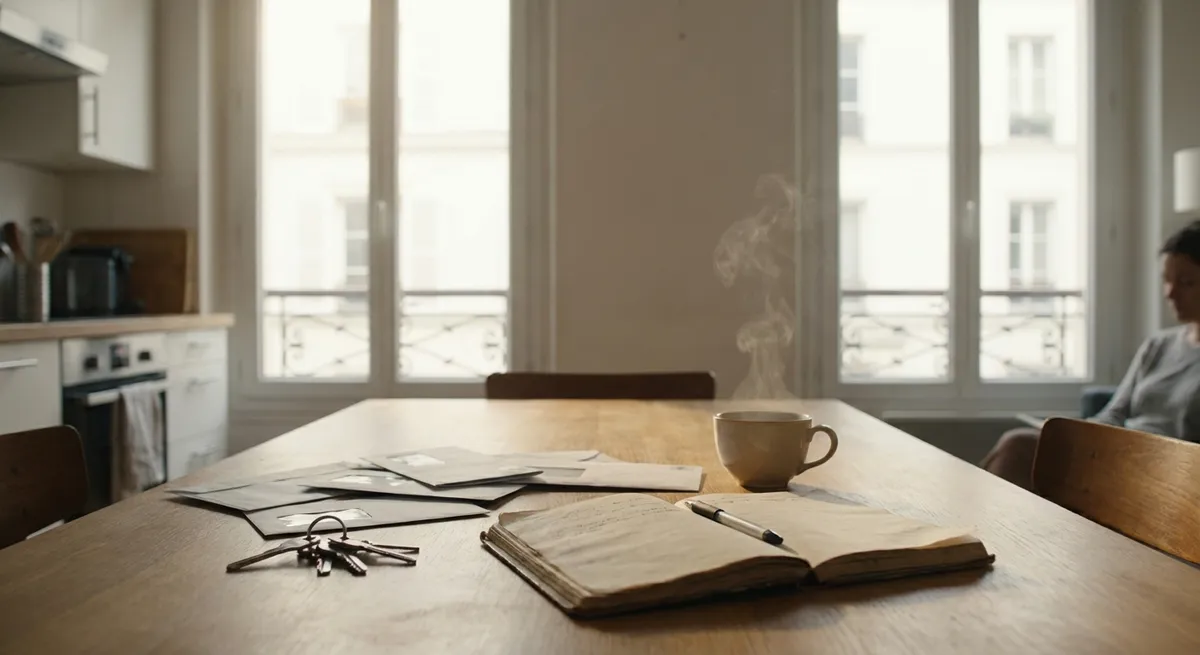
Sometimes the mind feels too crowded to sort things out just by sitting quietly. Bringing mindful attention into writing can help: you’re not journaling to create a polished narrative, but to let tangled thoughts spread out where you can see them.
A mindful writing practice (5–15 minutes):
- Sit somewhere relatively quiet with a notebook or digital document.
- Take a few slower breaths to arrive in your body.
Begin writing from direct experience, using prompts like:
- “Right now, I notice…” - “In my body, I feel…” - “In my mind, there is…”
Write in short, simple phrases rather than long explanations:
- “Tightness in chest.” - “Thought about work email.” - “Feeling of pressure behind the eyes.” 5. If you drift into analysis or storytelling, that’s okay—just notice and gently steer back to simple noticing. 6. When you’re done, pause and take a breath. You don’t need to solve everything you’ve written. Just acknowledge what you’ve seen.
By externalizing thoughts this way, you give your mind less to secretly juggle. It becomes easier to distinguish what needs action, what needs kindness, and what can simply be allowed to pass. This soft clarity often feels quieter than “aha!” moments, but it can be just as transformative.
Allowing Clarity to Come in Its Own Time
Meditation and mindfulness are less like flipping a switch and more like tending a small garden: small, repeated gestures of care that slowly change the landscape. You don’t have to do every practice at once. You might simply choose one—perhaps the mindful pause between tasks or a short breathing meditation—and explore it for a week.
On some days, you may feel clearer and more grounded. On other days, you may feel restless or foggy. Both are part of the practice. Clarity is not a constant state; it’s a quality that comes and goes, like sunlight moving through leaves.
What these practices offer is not a guarantee of permanent calm, but a path back to yourself—one breath, one pause, one moment of noticing at a time. In learning to meet your own mind with gentleness, you create the conditions in which mental clarity can quietly return.
Sources
- [National Center for Complementary and Integrative Health (NCCIH) – Meditation: In Depth](https://www.nccih.nih.gov/health/meditation-in-depth) - Overview of meditation, potential benefits, and safety considerations from a U.S. government health agency
- [American Psychological Association – Mindfulness Meditation: A Research-Proven Way to Reduce Stress](https://www.apa.org/topics/mindfulness/meditation) - Summarizes psychological research on mindfulness and its effects on attention and emotional regulation
- [Harvard Health Publishing – Mindfulness Meditation May Ease Anxiety, Mental Stress](https://www.health.harvard.edu/mind-and-mood/mindfulness-meditation-may-ease-anxiety-mental-stress) - Discusses how mindfulness practices can impact stress and mental clarity, with references to clinical studies
- [Mayo Clinic – Meditation: A Simple, Fast Way to Reduce Stress](https://www.mayoclinic.org/tests-procedures/meditation/in-depth/meditation/art-20045858) - Practical introduction to different types of meditation and their benefits from a major medical institution
- [UCLA Mindful Awareness Research Center – Free Guided Meditations](https://www.uclahealth.org/programs/marc/free-guided-meditations) - Offers guided audio practices that support body awareness, breathing, and present-moment attention
Key Takeaway
The most important thing to remember from this article is that this information can change how you think about Meditation.